
The idea is good. The message is not landing.
Jargon, over-explaining, and weak framing bury what the audience actually needs to understand.
AI keynote speaker · Leadership · Future of work · Communication
Keynotes and executive sessions for leaders navigating AI adoption, organizational change, clearer communication and the changing nature of work.
Most companies are asking the wrong AI question.
They ask: What can AI do for us?
The better question is: Where is the work actually breaking down?
If approvals are unclear, ownership is fuzzy, and every exception still lands on one person, you don’t have an AI problem. You have an operating problem.
Start with the work. Find the bottleneck. Clarify ownership. Decide where judgment must stay human.
Then use AI where it removes friction, speeds information, or improves a decision.
AI is not the strategy. A better operating system is.
And here’s the test: After you add AI, does the work need less rescuing?
If not, you have made yourself more dependent.
The problem
Most organizations already have enough information. The problem is what happens when smart people leave the same room with different interpretations of the priority, the decision, or what happens next.
Jargon, over-explaining, and weak framing bury what the audience actually needs to understand.
Ownership, priorities, and follow-through remain vague after the meeting ends.
Technology enters the conversation before the workflow, judgment, risk, or actual use case has been defined.
The solution
Not just what people know. What they notice, how they frame the issue, who owns the decision, and what they do differently when they return to work.
A sharper way to name the problem, the priority, and the next step.
Clearer thinking about judgment, responsibility, and who moves the work forward.
A clear way to distinguish useful augmentation from expensive distraction.
Ideas that survive the event and show up in meetings, handoffs, projects, and operating routines.
Ways to work together
Each format starts with the audience and the outcome. The difference is how much of the room should listen, work, or participate.
45–60 minutes plus optional Q&A. Built for conferences, company events, and leadership audiences.
A working session that turns recurring friction into clearer roles, communication rules, decision points, and practical next steps.
Moderation, interviews, and panels that connect business, culture, operations, and AI without drifting into generic talking points.
Typical engagement fees
Published fees make it easier to judge fit before an inquiry. Final scope is confirmed around the audience, format, travel, and event requirements.
45–60 minutes plus Q&A, discovery, customization, slides, organizer copy, bio, and attendee takeaway.
Up to 3.5 hours of facilitated work for leadership teams and groups of up to 25 participants.
Up to six instructional hours with working outputs, decision rights, roadmap, and follow-up.
Custom company programs shaped around the room, business problem, and desired operating outcome.
Panels, moderation, interviews, and other custom formats are quoted by scope. Travel, venue, and third-party costs are separate when applicable.
See complete pricingRepresentative topics
Each talk is shaped around the audience and event objective. These four topics sit at the intersection of AI, leadership, communication, and execution.
AI & WORKFLOW DESIGN
A practical AI keynote on finding where work actually breaks down, clarifying ownership, protecting human judgment, and using AI only where it reduces friction.
LEADERSHIP & ORGANIZATIONAL CHANGE
A leadership keynote on founder dependence, ownership, delegation, and building teams that can move without constant rescue.
LEADERSHIP COMMUNICATION
A communication keynote on judgment, alignment, decision-making, and what actually happens after the meeting.
EXECUTION & ORGANIZATIONAL CLARITY
A leadership and execution keynote built around Organize, Prioritize, Delegate, Execute, and Validate.
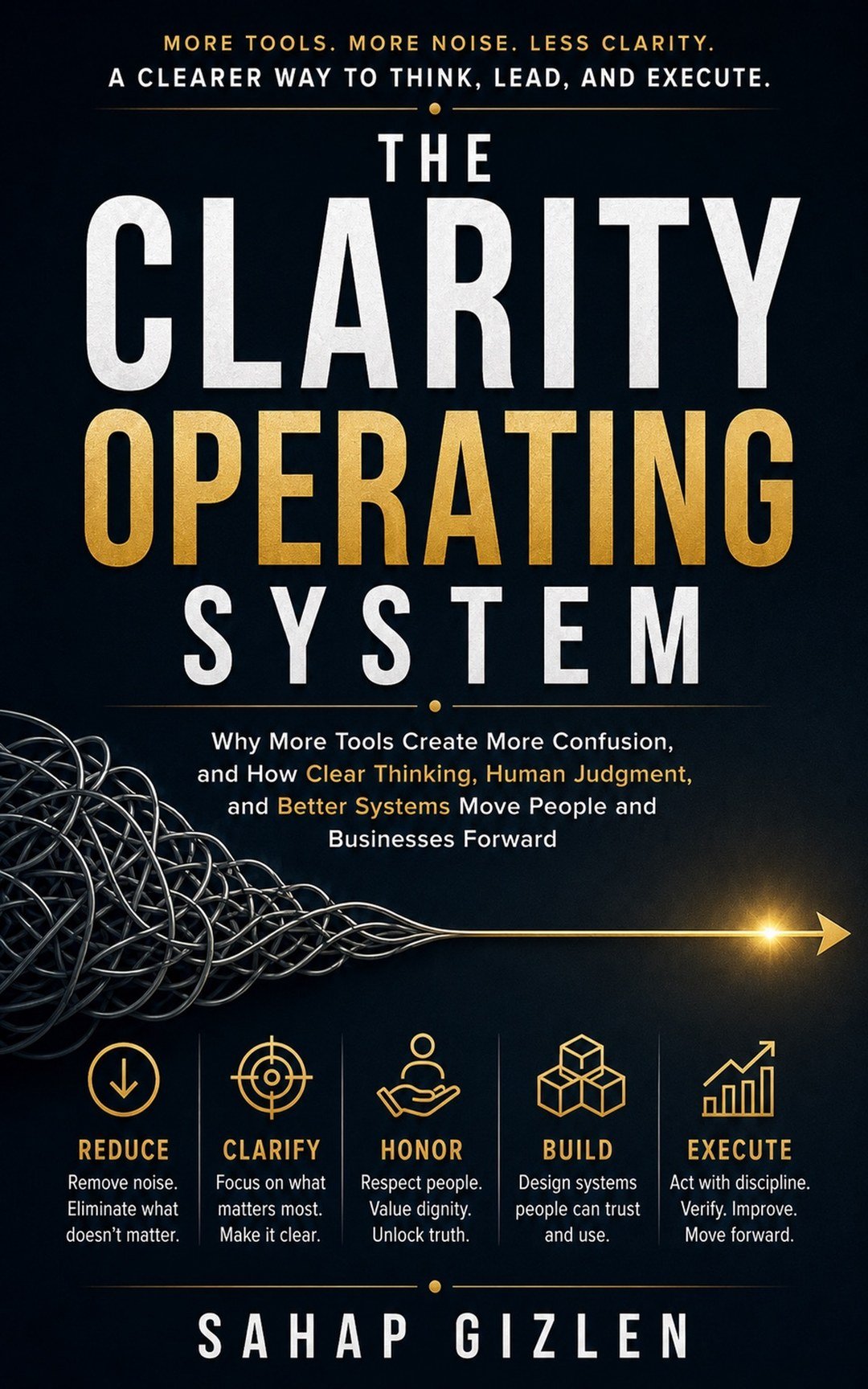
More tools. More noise. Less clarity.
Best fit
Not the right fit
The book
The Clarity Operating System extends the conversation beyond the room with a framework for thinking clearly, communicating precisely and operating with more discipline.
Available where the conversation matters
Based in the New York City metropolitan area and available for conferences, corporate events, leadership meetings, executive offsites, and virtual sessions across the U.S.
Best suited to organizations looking for grounded talks on AI, leadership, the future of work, communication and execution. The focus is on decisions people can use, not trend commentary.
For organizers
The questions planners usually need answered before shortlisting a keynote speaker or workshop facilitator.
Core topics include AI adoption, leadership and organizational change, the future of work, leadership communication, organizational clarity, decision-making and execution.
Yes. His AI talks focus on adoption for business leaders: where AI can improve work, what should remain human, how to evaluate use cases, and what needs to be clear before automation begins.
An AI keynote can cover adoption, productivity, human judgment, workflow design, responsible use and the organizational choices that determine whether AI actually improves the work.
Yes. Future-of-work sessions focus on how AI changes roles, decisions, communication, workflows, and the relationship between technology and human judgment.
Yes. Leadership topics include ownership, delegation, founder dependence, clearer decision-making, communication, accountability, and building teams that can move without constant rescue.
Yes. Every engagement starts with the audience, the operating context, and what people should understand, decide, or do differently afterward.
Yes. Sahap Gizlen is based in the New York City metropolitan area and is available for corporate events, conferences, leadership meetings, and executive offsites in New York City, New Jersey, nationwide, and virtually.
Yes. Formats include keynotes, executive sessions, workshops, offsites, moderated conversations, panels, and interviews.
Published starting points are $5,000 for a keynote, $7,500 for a half-day workshop, $12,500 for a full-day workshop, and $15,000–$30,000 for an executive offsite or custom company program. Panels, moderation, interviews, travel, and other event-specific requirements are quoted separately when applicable.
No. The focus is organizational rather than engineering-heavy. AI is addressed as a business, workflow, and decision tool.
Yes. A book-based team program can include copies of The Clarity Operating System and a facilitated session built around its frameworks for clarity, communication, delegation, and execution.
Start with the room
Audience, date, objective, and format are enough to start. From there, the session can be shaped around the room, the decision, and the desired change.